

If you’ve ever shaped your nails at home or had a manicure at a salon, chances are you’ve used an emery board nail file—even if you didn’t know its name. Despite its simplicity, the emery board plays a crucial role in nail care, nail health, and professional manicuring.
In this in-depth guide, we’ll explore what an emery board nail file is, how it differs from other nail files, how grit numbers like 100/180 or 180/240 work, and how to choose the least damaging nail file for your specific nail type. Whether you’re caring for natural nails, gel manicures, toenails, or even pet nails, this article will help you make informed decisions based on real-world nail science—not myths.
What Is a Nail File?
A nail file is a grooming tool used to shape, smooth, and refine the edges of fingernails and toenails. Nail files work through abrasion: a textured surface gently removes layers of keratin to achieve a desired length or shape.
There are many nail file types, including:
- Emery board nail files
- Glass (crystal) nail files
- Metal nail files
- Ceramic nail files
- Electric nail files (e-files)
Each type differs in material, grit, durability, and how aggressively it interacts with the nail plate.
What Is an Emery Board Nail File?
An emery board nail file is a disposable or semi-disposable nail file made from layers of cardboard or wood, coated with emery abrasive (a natural mineral composed mainly of aluminum oxide).
Unlike solid metal or glass files, emery boards are lightweight, flexible, and affordable, making them one of the most widely used nail tools worldwide.
👉 Why is it called an emery board?
Because its abrasive surface is made from emery, a mineral historically mined and bonded to paper or board for sanding and polishing applications.
Emery Board vs Nail File: Is There a Difference?
This is one of the most searched questions online.
Short answer:
An emery board is a type of nail file—but not all nail files are emery boards.
| Feature | Emery Board Nail File | Other Nail Files |
|---|---|---|
| Material | Emery + paper/wood | Glass, metal, ceramic |
| Flexibility | Flexible | Usually rigid |
| Durability | Disposable | Long-lasting |
| Best for | Natural nails | Gel, acrylic, precision work |
| Cost | Low | Medium to high |
So when people ask about the “emery board nail file difference”, they’re usually comparing emery boards to glass nail files or metal nail files, which we’ll cover shortly.
Understanding Nail File Grit: What Do the Numbers Mean?
One of the most confusing aspects of nail care is nail file grit.
Nail File Grit Definition
Grit refers to the coarseness of the abrasive surface.
- Lower number = coarser grit = more aggressive
- Higher number = finer grit = gentler
Nail File Grit Chart (Simplified)
| Grit | Common Use |
|---|---|
| 80–100 | Acrylics, hard gel removal |
| 100/180 | Shaping enhancements & strong natural nails |
| 120/180 | Gel nails, overlays |
| 180 | Natural nails (safe shaping) |
| 180/240 | Refining edges, smoothing |
| 240+ | Buffing, finishing |
100/180 Grit Nail File: Which Side Is Which?
A 100/180 nail file is double-sided, which often causes confusion.
- 100 grit → rougher side (used for acrylics, gel removal, thick toenails)
- 180 grit → finer side (used for shaping natural nails or smoothing enhancements)
👉 Is 100 or 180 grit stronger?
100 grit is stronger and more abrasive.
Using the wrong side on natural nails can cause peeling or splitting—one of the most common mistakes in DIY manicures.
What Grit Emery Board Is Best for Natural Nails?
For most people, the best emery board for natural nails is:
- 180 grit (or finer, such as 180/240)
This grit is strong enough to shape nails efficiently while minimizing trauma to the nail plate.
Many professional brands now produce 180-grit emery boards for natural nails, such as those found in salon-grade packs on Amazon and specialty nail retailers.
Can Emery Boards Damage Nails?
Yes—if used incorrectly.
How Damage Happens:
- Filing back and forth aggressively
- Using grit that’s too coarse
- Filing wet, softened nails
- Pressing too hard
- Using worn-out or peeling files
How to File Safely:
- File in one direction
- Use light pressure
- Choose 180 grit or higher for natural nails
- File dry, not wet
- Replace emery boards regularly
👉 What is the least damaging way to file nails?
A fine-grit emery board or glass nail file, used gently in one direction on dry nails.
Emery Board vs Glass Nail File
This comparison appears frequently in forums and expert discussions.
Emery Board Nail File
Pros
- Affordable
- Easy to find
- Flexible
- Hygienic (disposable)
Cons
- Wears out quickly
- Can fray nail edges if low quality
Glass Nail File
Pros
- Extremely gentle
- Seals nail edges
- Long-lasting
- Ideal for fragile nails
Cons
- Breakable
- Higher cost
👉 Many nail professionals recommend glass nail files for weak or peeling nails, and emery boards for everyday shaping and salon use.
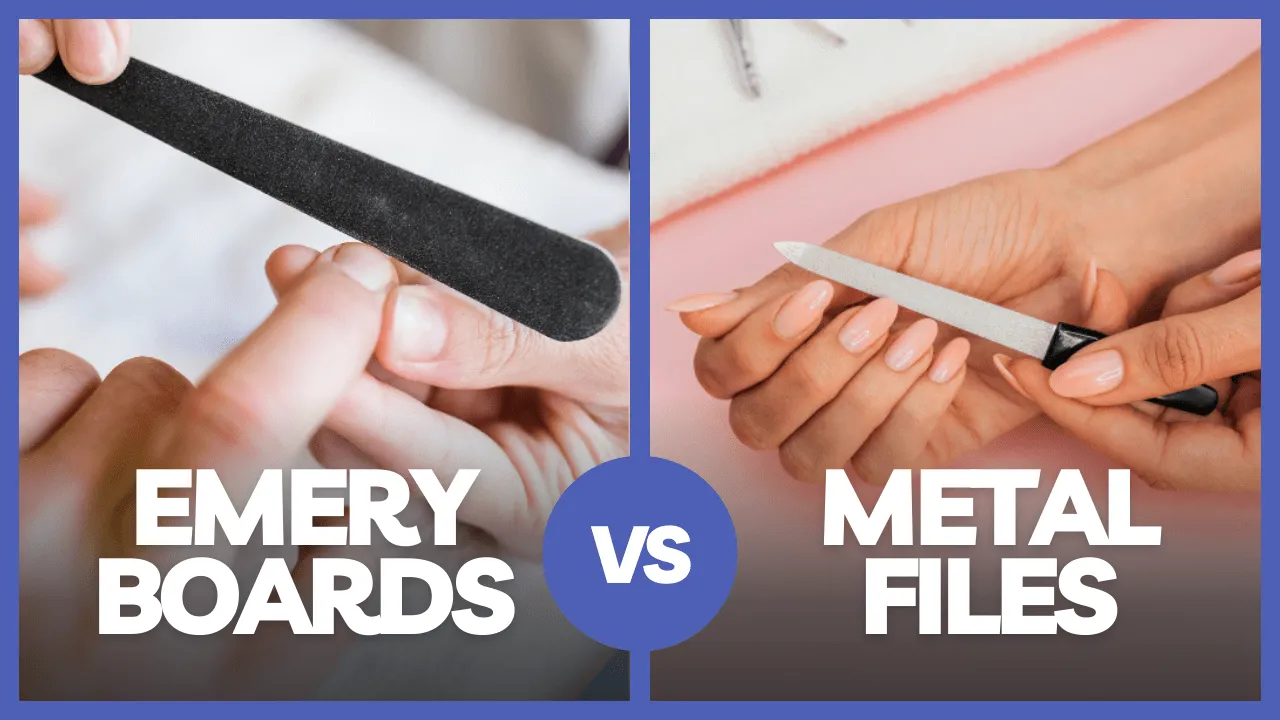
Emery Board vs Metal Nail File
Metal nail files are durable but controversial.
- They are too harsh for most natural nails
- Can cause micro-tears
- Often recommended only for artificial nails or emergency use
For nail health, emery boards are generally safer than metal files.
What Grit Nail File to Prep for Gel Polish?
When preparing nails for gel polish:
- Use 180 grit to lightly remove shine
- Avoid deep filing—only surface prep is needed
👉 Should I rough up my nails before applying gel polish?
Yes, but lightly. Over-filing weakens the nail plate and shortens nail lifespan.
Can an Emery Board File Down Gel Nails?
Yes—but with limitations.
- 100 grit can break the top seal
- 120–180 grit can thin gel layers
- Complete removal usually requires soaking or e-filing
Emery boards are best for refinement, not full gel removal.
Is It Better to File Nails Wet or Dry?
Always file nails dry.
Wet nails are softer and more elastic, making them prone to splitting and peeling when filed.
Why Do Emery Boards Have Two Sides?
Double-sided emery boards increase versatility:
- One side for shaping
- One side for refining
This design makes them efficient, affordable, and ideal for home and professional use.
Emery Board Nail File for Toenails and Dogs
Toenails
Toenails are thicker and can tolerate:
- 100–120 grit for shortening
- 180 grit for smoothing
Dogs
Yes—emery board nail files for dogs exist.
They are:
- Extra coarse
- Often paired with electric grinders
- Used to smooth sharp edges after clipping
Are Emery Boards Still Relevant Today?
Absolutely.
Despite advances in nail technology, emery board nail files remain a cornerstone of nail care because they are:
- Accessible
- Effective
- Affordable
- Easy to use correctly with basic knowledge
Q&A: Emery Board Nail File FAQs
What is an emery nail file?
A nail file coated with emery abrasive, typically on a cardboard or wooden base.
Which side of an emery board is rougher?
The side with the lower grit number.
Which type of nail file is best?
For natural nails: 180-grit emery board or glass file.
What grit emery board for toenails?
100–180 grit, depending on thickness.
Can emery boards damage nails?
Yes, if too coarse or used aggressively.
Is 100 or 180 grit stronger?
100 grit is stronger and rougher.
What is a 240 grit nail file used for?
Finishing, smoothing, and refining edges.
Recommended Further Reading
- Emery Boards vs Metal Nail Files – KaiGu Beauty
- Nail File Definition and History – Wikipedia
- Glass Nail File vs Emery Board – Dr. Dana
- Professional Emery Boards on Amazon
- Community Discussion on Nail Files – Reddit
SEO-Optimized Title & Meta Description Ideas
- Title: Emery Board Nail File Explained: Grits, Uses, and Nail Health
Description: Learn what an emery board nail file is, how grit numbers work, and how to choose the best nail file for natural nails, gel polish, and toenails. - Title: Emery Board vs Nail File: What’s the Real Difference?
Description: Discover the difference between emery boards, glass nail files, and metal files, plus expert tips on nail file grit and safe filing. - Title: Best Emery Board Nail File for Natural Nails (100/180 vs 180/240)
Description: Confused about nail file grit? This guide explains 100/180 nail files, which side is which, and how to file nails safely. - Title: Nail File Grit Chart: How to Choose the Right Emery Board
Description: A complete nail file grit chart with practical advice on emery board nail files, gel prep, and damage prevention. - Title: Can Emery Boards Damage Nails? Nail Experts Explain
Description: Learn whether emery board nail files are safe, what grit to use, and the least damaging way to shape your nails.